
ChatGPT Business Profiles: A New Opportunity for Brand Visibility
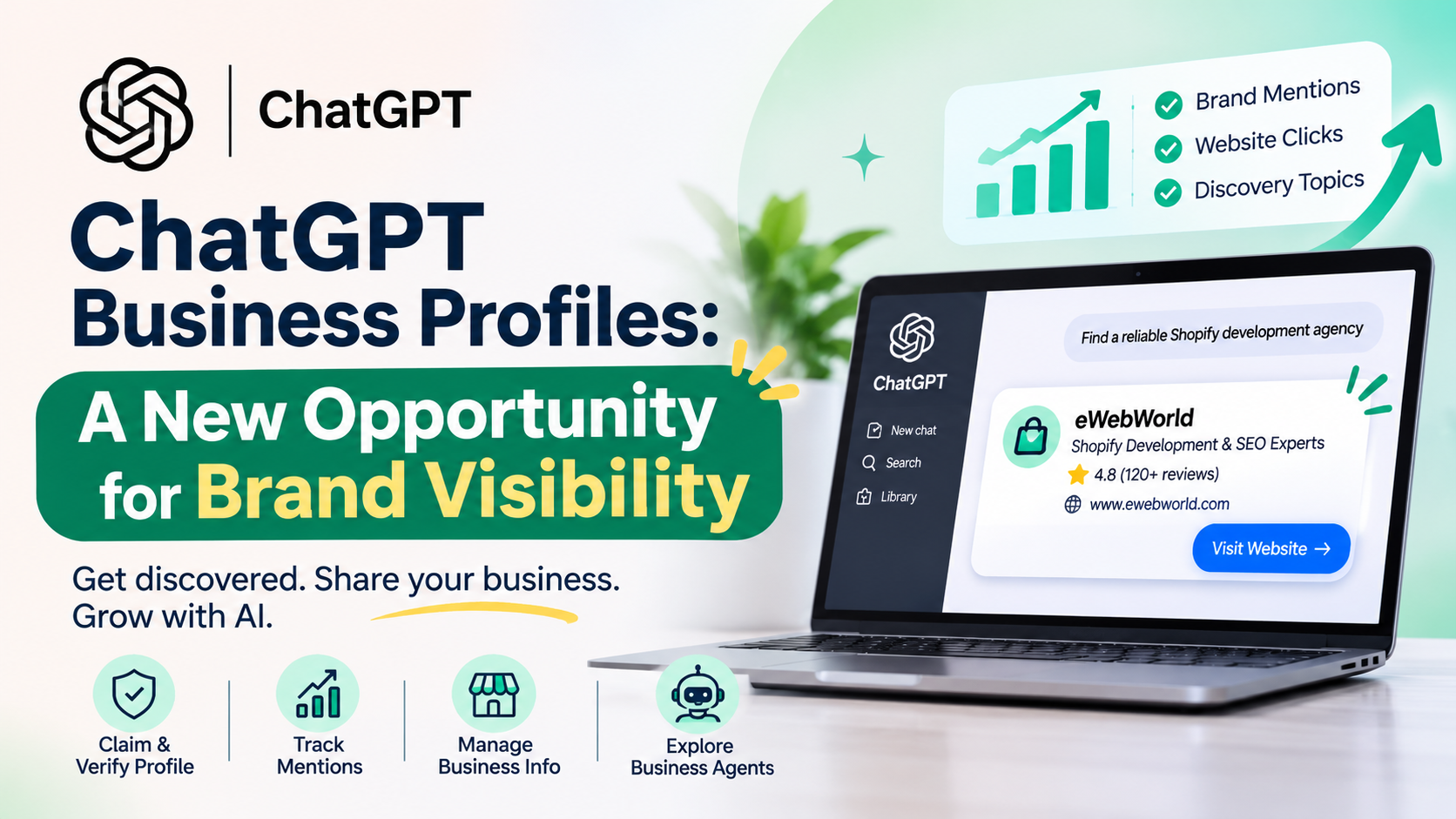
The way customers discover businesses online is changing. For years, businesses have focused on improving their Google rankings, increasing organic traffic, and building a strong presence across search engines. However, with the growing adoption of AI-powered platforms, the customer discovery journey is expanding beyond traditional search.
ChatGPT is becoming an important platform where people explore products, compare services, ask for recommendations, and research businesses before making decisions.
Recognizing this shift, OpenAI introduced Businesses in ChatGPT on November 10, 2026. This new initiative allows eligible businesses to claim their profiles, manage business information, access engagement insights, and explore new ways to connect with potential customers through AI-powered interactions.
For businesses looking to strengthen their digital presence, this development introduces another opportunity to participate in AI-driven discovery.
Let’s understand what ChatGPT Business Profiles are, how they work, and what businesses can do to improve their visibility in AI-powered search.
What Are ChatGPT Business Profiles?
ChatGPT Business Profiles are business listings that allow companies to manage how their information appears in ChatGPT. Through OpenAI’s Business Hub, eligible businesses can claim and verify their profiles, update important business details, and provide product information to help customers discover their offerings. The initiative is part of OpenAI’s broader effort to make ChatGPT a platform where people can discover businesses, explore products, compare options, and interact with companies. Once a business completes the required verification, it can manage details such as:
- Business name and website
- Business description
- Product and service categories
- Company logo and cover image
- Product information, pricing, and availability
- Delivery and return policies
This gives businesses a way to provide accurate and updated information that ChatGPT can use when responding to relevant customer queries. Businesses can explore the official announcement here: Introducing Businesses in ChatGPT – OpenAI
How Does OpenAI's Business Hub Work?
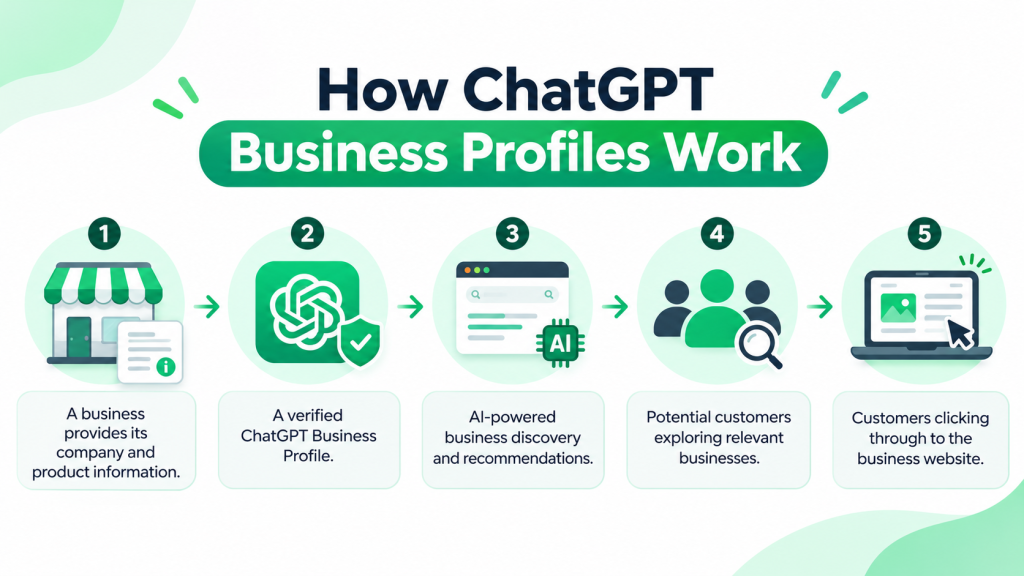
OpenAI’s Business Hub acts as a central place where eligible businesses can manage their presence in ChatGPT. It offers several features designed to help companies maintain accurate information and understand how customers discover and interact with their businesses. Let’s look at its key features.
1. Claim and Verify Your Business Profile
Businesses can search for their existing listing in ChatGPT and claim ownership through Business Hub. After completing the required verification process, authorized business representatives can manage their company information and make updates to their profiles. A verified business profile helps establish that the listing is managed by an authorized representative. Businesses can use the available verification methods, which may include business email, phone, website domain, or Shopify integration. Additional identity verification is required before certain management features become available.
2. Manage Business Information
Accurate business information plays an important role in helping customers understand what a company offers. Through Business Hub, businesses can update their descriptions, websites, service categories, logos, and other relevant details. Retailers can also connect product feeds containing information such as:
- Product names and descriptions
- Product prices
- Product availability
- Product-related details
Shopify merchants can connect their stores through Shopify or Business Hub, making it easier to share current product information. Providing accurate information helps ChatGPT access relevant business details when answering customer questions about products and services.
3. Track Business Mentions and Website Clicks
One of the most interesting features of Business Hub is its ability to provide aggregated insights into how people engage with a business through ChatGPT. Businesses can explore three important areas:
Business Mentions: Understand how often ChatGPT references your website or displays your local business listing in relevant responses.
Website Clicks: Track how frequently users click through to your website from ChatGPT.
Discovery Topics: Explore common themes in conversations where your website is mentioned or cited.
These insights can help businesses understand which topics are associated with their brand and identify opportunities to improve their website content and business information. The insights are aggregated to protect user privacy. Businesses do not receive access to individual customer conversations or personal prompts.
4. Introduce Business Agents
OpenAI is also introducing Business Agents, which provide another way for companies to interact with potential customers. A Business Agent can answer customer questions using information provided by the business, including product details and policies. For example, imagine someone exploring an online store through ChatGPT. They may want to know:
- Which product is suitable for their requirements?
- What is the difference between two product options?
- What are the available sizes or variations?
- What is the return or delivery policy?
A Business Agent can help answer these questions and guide customers through their options. This creates an additional opportunity for businesses to help interested customers understand their offerings before visiting their websites or taking the next step.
Availability note: Business Agents are currently available to eligible eCommerce and online service businesses in the United States. OpenAI plans to expand availability to more markets and business categories over time.
Why Are ChatGPT Business Profiles Important for Brand Visibility?
Traditional search engines have been an important source of online discovery for businesses. However, customers are increasingly using AI tools to research products, explore services, and find solutions to their problems. This creates a new discovery environment where businesses need to consider how their brands appear across both traditional search engines and AI-powered platforms. Here are some reasons why ChatGPT Business Profiles matter.
1. Another Opportunity to Get Your Brand Discovered
- Which Shopify development agency can help build an online store?
- What are the best skincare brands for sensitive skin?
- Which companies offer website development services?
- What are some reliable project management software options?
2. Better Control Over Business Information
Outdated or inconsistent information can create confusion for potential customers. For example, a business may have changed its services, updated its website, or introduced new products. Business Hub allows authorized representatives to update key business information and, where applicable, provide current product feeds. This helps businesses keep important details more accurate and consistent within the ChatGPT ecosystem.
3. Understand How Customers Discover Your Brand
Business visibility is not only about appearing in search results. Understanding how customers discover a brand is equally important. The aggregated insights available through Business Hub provide information about mentions, website clicks, and discovery topics. Businesses can use these insights to identify relevant content opportunities.
For example, if a business frequently appears in responses related to Shopify development, it may be worth strengthening its content around Shopify development services, integrations, migration, and store optimization.
4. Create More Opportunities for Customer Interaction
Business Agents introduce a conversational way for customers to explore products and services. Instead of relying only on website navigation, customers can ask questions and receive information through a dedicated business conversation. For eligible businesses, this could help reduce friction during the research and consideration stages of the buying journey.
How Can Businesses Improve Their Visibility in ChatGPT?
Claiming a business profile is one step, but building a strong digital presence requires consistent optimization across different channels. Businesses should continue investing in their websites, content, technical SEO, and brand authority. Here are some practical ways to prepare for AI-driven discovery.
1. Maintain Accurate and Consistent Business Information
Start by reviewing your business information across your website, business listings, and other relevant online platforms. Make sure your business name, website, services, contact details, and descriptions are accurate. If your business is eligible for Business Hub, claim and verify your profile and keep the information updated. Consistency helps customers understand your business and gives AI platforms access to reliable information.
2. Create Helpful, Question-Based Content
People often use AI platforms to ask detailed questions rather than search using only short keywords. For example, instead of searching for “Shopify SEO services,” someone might ask: “How can I improve the organic traffic of my Shopify store?” Businesses should create content that addresses these real customer questions. Consider publishing:
- Detailed how-to guides
- Industry-specific articles
- Frequently asked questions
- Product and service comparisons
- Informative case studies
- Problem-solving resources
Content should provide clear, useful answers rather than simply repeating keywords.
3. Strengthen Your Website's SEO Foundation
Traditional SEO remains important for AI-driven discovery. A technically sound website makes it easier for search engines and AI-powered systems to access, understand, and interpret your content. Focus on:
- Improving website loading speed
- Ensuring mobile responsiveness
- Fixing broken links and crawlability issues
- Creating a logical website structure
- Using descriptive page titles and meta descriptions
- Implementing relevant structured data
- Maintaining clear internal linking
A well-optimized website provides a stronger foundation for long-term digital visibility.
4. Use Structured Data to Explain Your Business
- Organization Schema
- LocalBusiness Schema
- Product Schema
- Service Schema
- Article Schema
- FAQPage Schema, where eligible
5. Build Topical Authority
- Shopify store development
- Shopify Plus development
- Shopify theme customization
- Shopify app integrations
- Shopify store migration
- Shopify speed optimization
- Shopify SEO best practices
6. Strengthen Your Brand Presence Across Trusted Platforms
Your website is not the only place where customers discover your business. Maintain accurate profiles on relevant business directories, industry platforms, review websites, and professional networks. Share useful insights through LinkedIn and other relevant channels. Earn genuine industry mentions and relevant backlinks by publishing valuable resources and building relationships with other websites. A consistent and credible brand presence across the web supports your overall digital marketing strategy.
7. Monitor AI Search Visibility
As AI-powered discovery continues to develop, businesses should start paying attention to how their brands appear in AI-generated responses. Review the available Business Hub insights if your business is eligible. You can also periodically evaluate relevant customer questions across AI platforms to understand whether your website, products, or services are being referenced. Use these observations to identify content gaps and improve the information available on your website.
ChatGPT Business Profiles vs. Google Business Profile
ChatGPT Business Profiles and Google Business Profile both help businesses manage important information about their presence online, but they serve different ecosystems.
| Feature | ChatGPT Business Profiles | Google Business Profile |
|---|---|---|
| Platform | ChatGPT | Google Search and Maps |
| Business Information | Manage through Business Hub | Manage through Google Business Profile |
| Verification | OpenAI’s verification process | Google’s verification process |
| Visibility Insights | Mentions, website clicks, discovery topics | Performance metrics, including searches, views and interactions |
| Customer Discovery | AI-powered conversations and recommendations | Search results and local discovery |
| Customer Interaction | Business Agents for eligible businesses | Calls, messages where available, directions and website visits |
Both platforms offer businesses opportunities to manage their online presence, but they should not be treated as replacements for one another. Google Business Profile remains important for local search visibility, while ChatGPT Business Profiles introduce another way to manage business information within an AI-powered discovery platform. Businesses should maintain both where applicable as part of a broader digital presence strategy.
Will ChatGPT Business Profiles Replace Traditional SEO?
No. ChatGPT Business Profiles do not replace traditional SEO. Search engine optimization remains essential for helping websites attract relevant organic traffic, improve search visibility, and reach potential customers.AI-powered discovery adds another layer to the digital marketing landscape.
Businesses now need to think about two connected areas:
Traditional SEO: Improving website rankings, organic traffic, technical performance, content quality, and user experience.
AI Search Optimization: Making business information clear, creating helpful content, strengthening brand authority, and improving visibility across AI-powered discovery platforms.
This is where Generative Engine Optimization (GEO) and Answer Engine Optimization (AEO) become increasingly relevant. Rather than abandoning traditional SEO, businesses should build on their existing SEO strategies while preparing for changes in how people discover information online.
The Future of Brand Visibility in AI-Powered Search
The introduction of Businesses in ChatGPT represents an important development in the relationship between businesses and AI-powered platforms. With features such as business profile management, aggregated engagement insights, product feeds, and Business Agents, OpenAI is creating new ways for companies to participate in customer discovery.
For businesses, the opportunity is not simply about claiming another online listing. It is about understanding how customers discover brands, what information they need, and how digital experiences can support their decision-making process. As AI-powered discovery continues to evolve, businesses that invest in accurate information, helpful content, technical SEO, and strong brand authority will be better prepared to adapt.
At eWebWorld, we believe the future of digital visibility lies in combining strong SEO foundations with emerging AI search optimization strategies. Businesses that start preparing today can build a stronger foundation for tomorrow’s digital landscape.
Final Thoughts
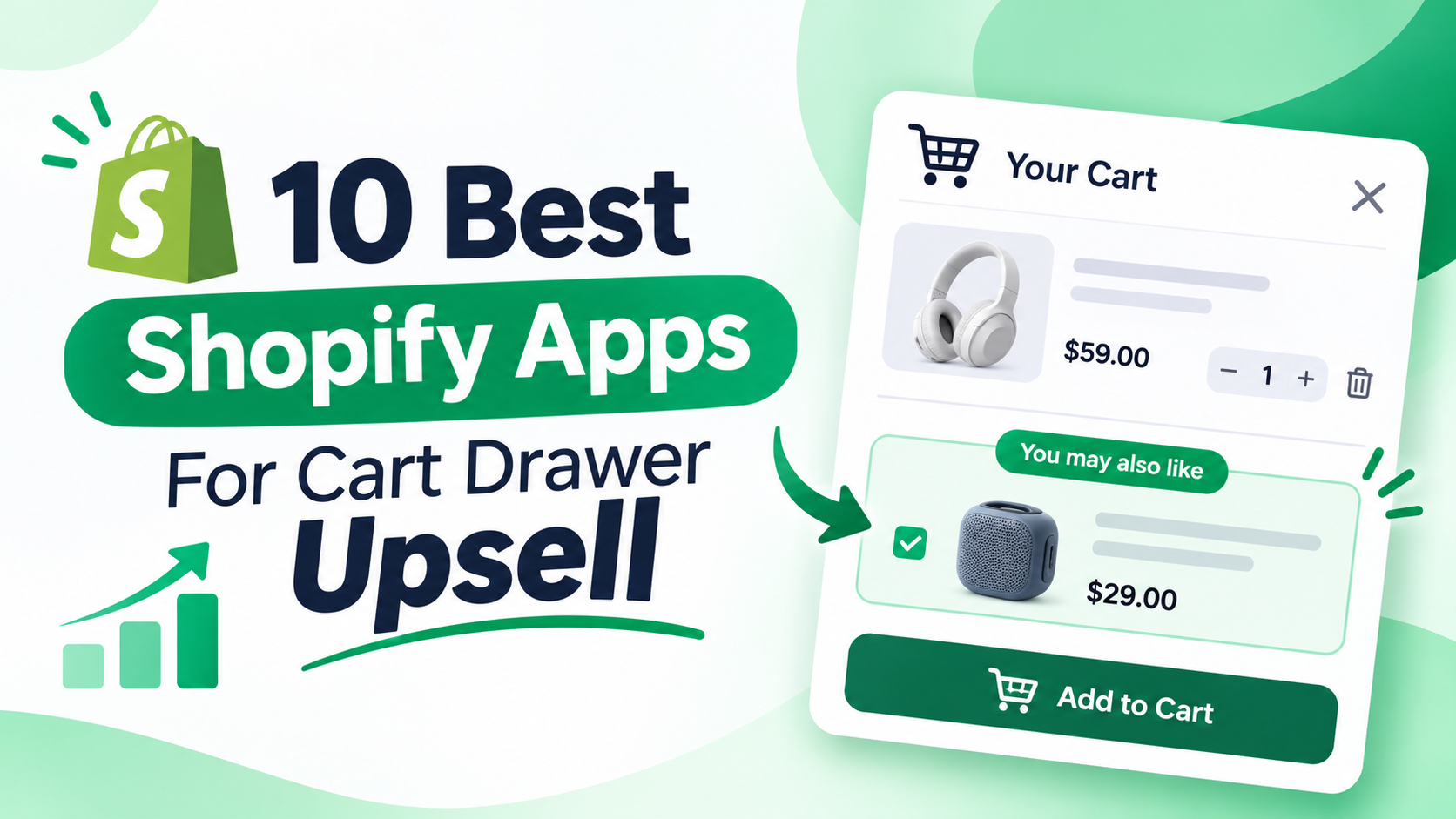
The right choice depends on what your Shopify store needs most right now. If you want a higher order value, look for a Shopify cart upsell app with useful product suggestions and a clear reward bar. If design matters more, choose a Shopify slide cart app that gives you control over the layout. If you sell in several countries, check its language and market support first.
Your budget and order volume matter too. Some plans are based on monthly orders, while others use a set monthly price, so check how the cost may change as your Shopify store grows. It also helps to start with one or two offers, such as a free shipping bar and a product suggestion. Too many offers can make a small cart panel feel crowded.
Before you decide, test your Shopify cart drawer app on both desktop and mobile, then review your order data after a few weeks. Look at average order value, how often shoppers add suggested products, and whether they still move smoothly to checkout. Even among the best Shopify cart upsell apps, the right one is the one that fits your products and how your customers shop.
Frequently Asked Questions
1. What is a ChatGPT Business Profile?
A ChatGPT Business Profile is a business listing that eligible companies can claim and manage through OpenAI’s Business Hub. It allows authorized representatives to update business information and access aggregated insights about how their businesses appear in ChatGPT.
2. How can I add my business to ChatGPT?
Eligible businesses can visit ChatGPT Business Hub, search for their existing business listing, claim it, and complete the required verification. Once approved, authorized representatives can manage their business information and access available features.
3. Is ChatGPT Business Hub available worldwide?
OpenAI has introduced Businesses in ChatGPT in beta. Eligible businesses in locations where ChatGPT is available can claim their profiles, subject to business eligibility and verification requirements. Business Agents currently have more limited availability, initially for eligible eCommerce and online service businesses in the United States.
4. Does claiming a ChatGPT Business Profile improve rankings?
Claiming a business profile does not guarantee higher placement in ChatGPT recommendations or search results. It allows businesses to manage their information and access available engagement insights. ChatGPT continues to make independent recommendations and comparisons.
5. What insights can businesses access through ChatGPT Business Hub?
Eligible verified businesses can access aggregated insights, including business mentions, website clicks, and discovery topics. These insights help companies understand how their websites and businesses appear in relevant ChatGPT interactions.
6. What is the difference between ChatGPT Business Profiles and Business Agents?
Business Profiles allow companies to manage their business information and understand how people engage with them through ChatGPT. Business Agents go a step further by allowing eligible businesses to offer dedicated AI-powered conversations that answer customer questions using information provided by the business.
7. How can SEO help businesses improve their visibility in ChatGPT?
Strong SEO practices can support AI discovery by making website content accessible, well-structured, informative, and relevant. Businesses should focus on helpful content, technical SEO, structured data, topical authority, and consistent brand information. However, no SEO technique guarantees placement in ChatGPT responses.
8. Is GEO replacing traditional SEO?
No. Generative Engine Optimization complements traditional SEO rather than replacing it. Businesses should continue optimizing their websites for search engines while also improving how their information can be understood and discovered through AI-powered platforms.

About The Author
Rishika Pawar is a Digital Marketing Specialist at eWebWorld with expertise in SEO, content strategy, and AI-first search optimization. She researches emerging technologies and collaborates with software engineers, UI/UX designers, and app developers to create comprehensive, research-backed content on mobile app development, web technologies, and digital transformation. Her work focuses on delivering accurate, user-first information that aligns with Google’s EEAT guidelines and modern AI search experiences.
Search
Popular Posts

Follow us

Recent Posts

About eWebWorld
eWebWorld is a Shopify and eCommerce development company in India with 10+ years of experience building and scaling online stores. We specialize in Shopify development, including store setup, customizations, theme development, migrations, integrations, and performance optimization. Through our expertise in eCommerce, technology, and digital marketing, we help businesses create better online experiences and achieve sustainable growth.