
7 Ways to Bring Shopify Customers Back Without Spending More on Ads
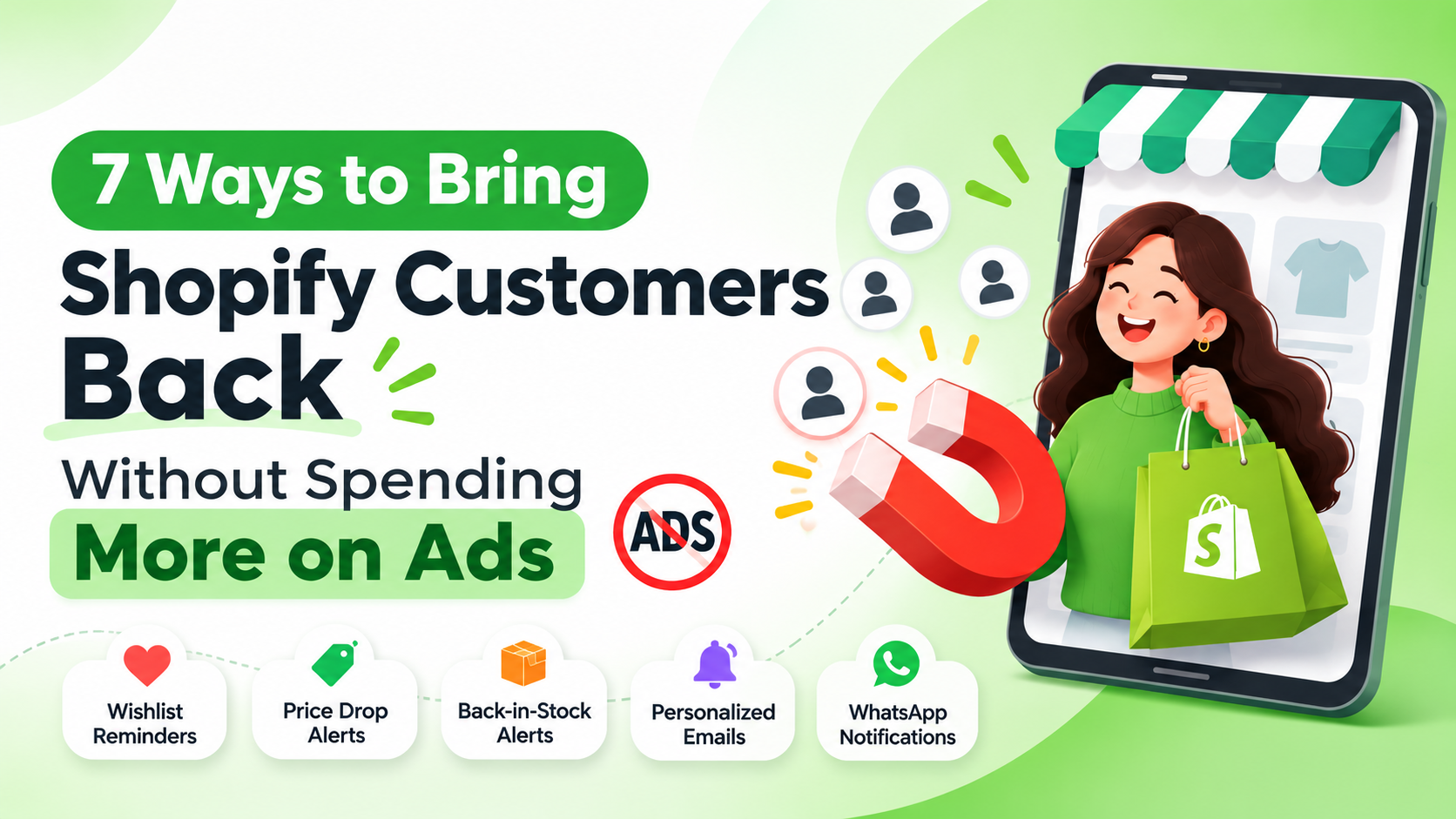
Getting visitors to your Shopify store is only half the job. The real challenge is giving them a reason to return, explore more products, and eventually make a purchase.
Many Shopify merchants invest heavily in paid advertising to attract new customers. However, constantly spending on ads to bring back existing visitors can quickly increase customer acquisition costs. Instead, businesses can focus on strategies that encourage previous visitors and customers to return through better shopping experiences, personalized communication, and customer engagement.
Whether someone left products in their cart, added items to a wishlist, or browsed your store without purchasing, there are several ways to reconnect with them without increasing your advertising budget.
In this blog, we’ll explore seven practical ways to bring Shopify customers back and encourage repeat purchases.
1. Use Wishlist Features to Keep Customers Interested
Not every customer is ready to purchase when they first visit your Shopify store. Some shoppers prefer to browse products, compare options, and return when they are ready to buy. A wishlist gives these customers a convenient way to save products they are interested in without having to search for them again.
For Shopify merchants, wishlists can help maintain customer interest even when shoppers leave the store without making a purchase. Here are some ways to make wishlist features more effective:
- Allow customers to save their favourite products for future purchases.
- Offer guest wishlist functionality so shoppers don’t have to create an account immediately.
- Let customers access their saved products when they return.
- Enable wishlist sharing so shoppers can share their favourite products with friends and family.
- Use wishlist activity to understand which products customers are interested in buying.
A wishlist also provides valuable insights into customer preferences. Merchants can identify popular products and understand what shoppers are considering before making a purchase. With eWeb – Wishlist & Alerts, Shopify merchants can offer wishlist functionality along with features such as guest wishlists, product sharing, and automated price-drop, back-in-stock, and low-stock alerts. This makes it easier to reconnect with interested shoppers and encourage them to revisit the store when their preferred products become more attractive to purchase.
2. Send Price-Drop Alerts to Interested Shoppers
Price is one of the factors that influences online purchasing decisions. A customer may like a product but decide to wait because the price doesn’t fit their budget at that moment. Instead of spending money on advertisements to bring that customer back, merchants can use price-drop alerts to reconnect with shoppers who have already shown interest.
For example, imagine a customer adds a pair of shoes worth $80 to their wishlist but doesn’t purchase them. A few days later, the merchant reduces the price to $65. A price-drop notification can inform the customer about the new price and give them another reason to visit the store. To make price-drop alerts more effective:
- Notify shoppers when wishlist products become cheaper.
- Clearly mention the updated price.
- Include a direct link to the product page.
- Avoid sending unnecessary notifications.
- Make sure customers have opted in to receive relevant communications.
Price-drop alerts help merchants reach shoppers who have already expressed interest in specific products instead of targeting a completely new audience.
3. Recover Abandoned Shopping Carts
Cart abandonment is a common challenge for eCommerce businesses. Customers may add products to their carts but leave before completing the checkout process. There can be several reasons behind this behaviour, including unexpected shipping costs, complicated checkout processes, payment concerns, or simply getting distracted.
Rather than immediately spending more on advertisements to attract new visitors, Shopify merchants can focus on recovering these abandoned shopping carts.Some practical ways to do this include:
- Send timely abandoned-cart emails.
- Include product images and details in recovery messages.
- Make it easy for customers to return to their saved carts.
- Highlight available discounts or free shipping offers when appropriate.
- Simplify the checkout process to reduce unnecessary steps.
A well-timed reminder can help customers continue their shopping journey without having to find the products all over again. However, merchants should avoid sending too many messages. Communication should be relevant, helpful, and respectful of customer preferences.
4. Use Back-in-Stock Alerts to Recover Lost Sales
When customers discover that their preferred product is unavailable, many leave the store and look for alternatives elsewhere. This can result in lost sales, especially when popular products frequently go out of stock. Back-in-stock alerts provide a way to reconnect with these interested shoppers once the product becomes available again.
For example, a customer visits a Shopify clothing store and wants to purchase a particular jacket, but their preferred size is unavailable. Instead of losing that customer, the store can allow them to subscribe to a back-in-stock notification. Once the product is restocked, the customer receives an alert and can return to complete the purchase. Merchants can make this strategy more effective by:
- Offering notifications for specific products and variants.
- Allowing customers to subscribe when an item is unavailable.
- Sending alerts as soon as the product is restocked.
- Including a direct product link in the notification.
- Keeping stock information updated.
With back-in-stock alerts, Shopify merchants can reconnect with shoppers who have already demonstrated purchase intent. This is particularly useful for fashion, beauty, electronics, and other stores where popular products and variants frequently sell out.
5. Build Customer Relationships Through Email and WhatsApp
Customers are more likely to return when a brand maintains meaningful communication with them. Email and WhatsApp are two useful channels for staying connected with previous customers and interested shoppers. Instead of sending generic promotional messages, merchants should focus on communication that matches customer interests and shopping behaviour. For example:
- Share updates about new product collections.
- Notify interested shoppers about special offers.
- Send relevant product recommendations.
- Inform customers about important product updates.
- Share price-drop and back-in-stock notifications where they have opted in.
WhatsApp can be particularly useful for timely communication because customers can receive relevant updates through a channel they already use regularly. However, merchants should obtain appropriate consent before sending marketing or notification messages and provide a way for customers to opt out. The goal is not to increase the number of messages customers receive. It is to make every communication more relevant and useful.
6. Create Personalized Shopping Experiences
Customers are more likely to revisit a store when they can easily find products that match their interests. A generic shopping experience may not give customers enough reasons to return. Personalization helps make the shopping journey more relevant by using customer preferences and previous interactions. Shopify merchants can introduce personalization through several approaches:
- Recommend products based on previous purchases.
- Display recently viewed products.
- Highlight products related to customers’ interests.
- Suggest complementary products.
- Use browsing and wishlist activity to understand customer preferences.
For example, if a customer previously purchased skincare products, a store can recommend complementary products from the same category during their next visit. Similarly, a customer who frequently browses a particular product category may find relevant recommendations more useful than generic promotions. Personalized shopping experiences help customers discover relevant products and make returning to the store more convenient.
7. Improve Product Discovery With Better Store Navigation
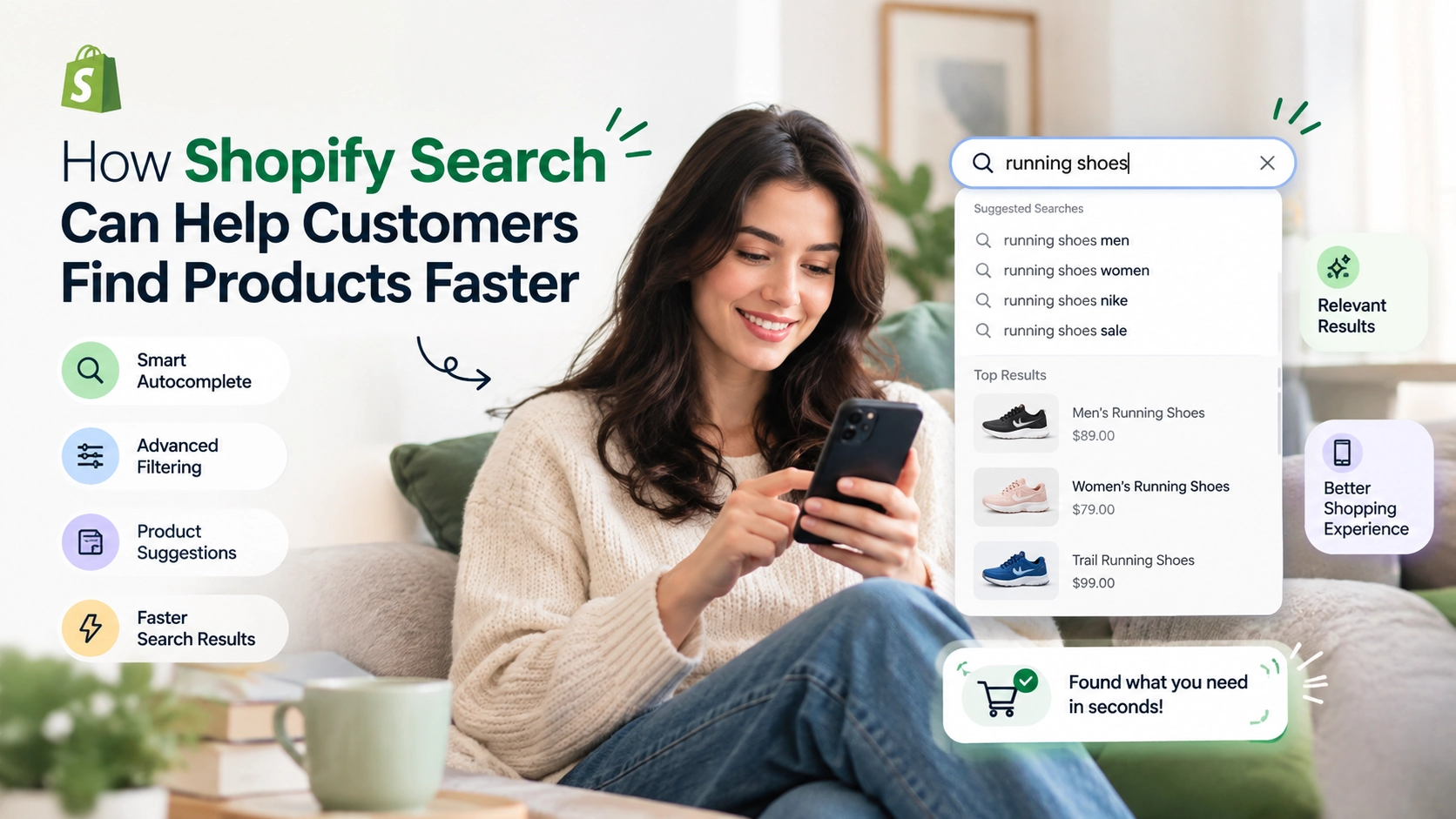
Sometimes customers don’t return because they cannot easily find what they are looking for. A store with hundreds or thousands of products can become difficult to navigate, especially when product categories, filters, and search functionality are not properly organized. Improving product discovery can make the shopping experience smoother and give customers more reasons to explore the store again. Here are some ways Shopify merchants can improve product discovery:
- Add a clear and accessible search bar.
- Introduce filters for price, size, colour, brand, and availability.
- Organize products into relevant collections.
- Display useful search suggestions.
- Allow customers to sort products based on price, popularity, or relevance.
- Make search and filtering experiences mobile-friendly.
For example, a customer looking for a black dress under $50 should be able to apply relevant filters and find matching products without browsing through hundreds of listings. A better search and filtering experience reduces the effort required to find products and helps customers move through the shopping journey more comfortably. For Shopify stores with large product catalogs, a dedicated search and filtering solution can make a significant difference.
How eWeb – Wishlist & Alerts Helps Shopify Merchants Bring Customers Back
Bringing customers back doesn’t always require another advertising campaign. Sometimes, it requires giving shoppers a convenient reason to return. eWeb – Wishlist & Alerts, developed by eWebWorld, helps Shopify merchants maintain customer interest through wishlist functionality and automated product alerts. With features designed to support customer engagement, merchants can:
- Allow shoppers to save their favourite products.
- Send price-drop alerts when wishlist products become cheaper.
- Notify customers when out-of-stock products become available again.
- Send low-stock alerts to create purchase urgency.
- Support email and WhatsApp notifications.
- Allow customers to share their wishlists.
- Track wishlist activity through analytics.
By combining wishlists with timely product notifications, merchants can reconnect with shoppers who have already expressed interest in their products.
Explore eWeb – Wishlist & Alerts: https://apps.shopify.com/wishlist-plus-1
Final Thoughts
Bringing Shopify customers back doesn’t always mean spending more money on advertising. It means making better use of the interest your store has already generated.
From wishlist features and automated alerts to abandoned-cart recovery, personalized recommendations, and improved product discovery, each strategy can help create more opportunities for customers to return.
The key is to understand why customers leave, what they are interested in, and what would encourage them to revisit your store.
Start by improving the shopping experience, communicating with customers at the right time, and making it easier for them to find and purchase the products they want.
With the right combination of customer engagement and retention strategies, your Shopify store can build stronger customer relationships and create more opportunities for repeat sales without continuously increasing its advertising budget.
Ready to bring more shoppers back to your Shopify store? Explore eWeb – Wishlist & Alerts by eWebWorld and turn customer interest into more purchase opportunities.

About The Author
Rishika Pawar is a Digital Marketing Specialist at eWebWorld with expertise in SEO, content strategy, and AI-first search optimization. She researches emerging technologies and collaborates with software engineers, UI/UX designers, and app developers to create comprehensive, research-backed content on mobile app development, web technologies, and digital transformation. Her work focuses on delivering accurate, user-first information that aligns with Google’s EEAT guidelines and modern AI search experiences.
Search
Popular Posts

Follow us

Recent Posts
About eWebWorld
eWebWorld is a Shopify and eCommerce development company in India with 10+ years of experience building and scaling online stores. We specialize in Shopify development, including store setup, customizations, theme development, migrations, integrations, and performance optimization. Through our expertise in eCommerce, technology, and digital marketing, we help businesses create better online experiences and achieve sustainable growth.